The GOLD Standard
Understanding Gold Purity in Jewelry – Expect a high gold standard in our Corvette Jewelry
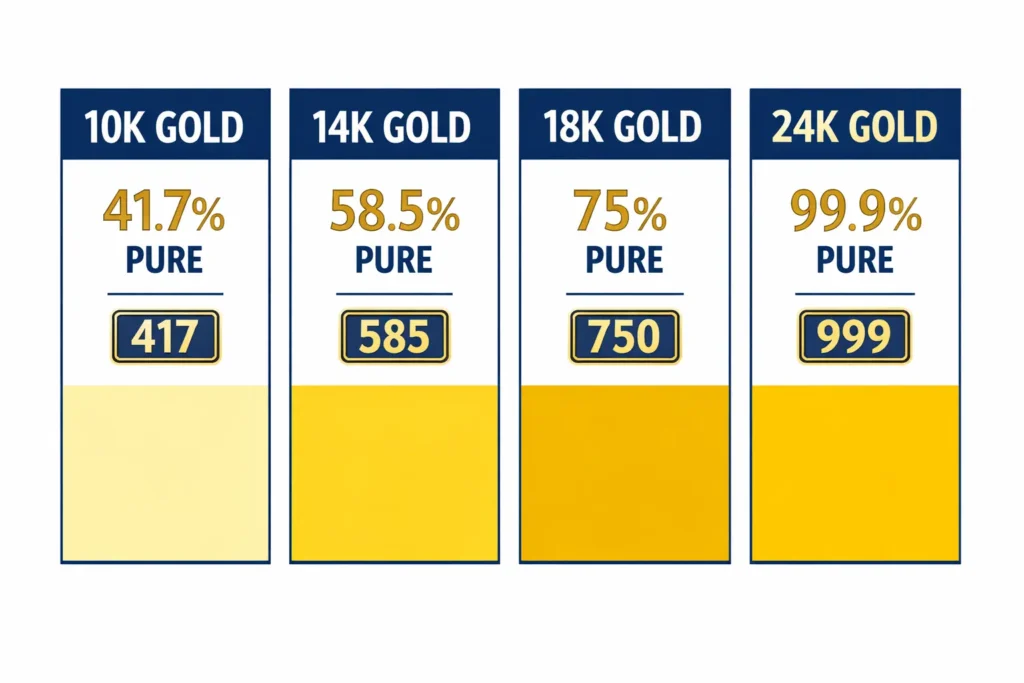
Gold purity is measured in karats, with 24k being pure gold. However, pure gold is too soft for most jewelry applications, requiring the addition of other metals to create durable pieces. The karat system tells you exactly how much gold is present in your jewelry, along with corresponding numerical stamps that jewelers use for legal identification.
14K Gold – Balance of Durability and Value
14K gold is a popular choice for jewelry lovers because it balances durability and value. When exploring the type of gold, 14K gold offers strength while maintaining a beautiful shine. Many people choose 14k gold earrings, bracelets, or necklaces for daily wear. Understanding the different types of gold and karat gold helps buyers make smart decisions. 14k gold price remains reasonable compared to 18 or 22 karats.
14k Gold (585 stamp) – Consists of 58.3% gold mixed with 41.7% other metals, creating a perfect blend of durability and beauty. This is the most popular choice in the United States.
Types of Gold by Color
Yellow Gold – Traditional Choice
- Yellow gold has always been a traditional choice in jewelry, loved for its timeless warm glow and classic style. It complements most skin tones making it a universally flattering choice. Yellow gold contains pure gold mixed with metals like copper and silver, which preserve the natural yellow color while adding strength. The more pure gold in the alloy, the richer and more vibrant the yellow color becomes. 24k gold displays the most intense yellow hue, while 10k gold appears lighter due to the higher percentage of other metals. Lower karat yellow gold (10k-14k) offers superior durability for everyday wear, resisting scratches and dents better than higher karats. 18k yellow gold provides a good balance of color richness and durability, while 22k-24k yellow gold requires more careful handling due to its softness.
White Gold – Modern Look
- White gold gives a modern look while offering timeless beauty. White gold stands apart giving a stylish look and blends perfectly with diamonds for a sleek finish. White gold is made by alloying pure gold with white metals such as palladium, nickel, manganese, or silver. The most common alloys use palladium for hypoallergenic properties or nickel for affordability, though nickel can cause allergic reactions in some people.
Rose Gold – Trendy Style
- Rose gold has become a trendy style that appeals to modern jewelry lovers. Rose gold stands out for its warm pinkish tone. It combines elegance with a modern touch, making it perfect for fashion forward choices. Rose gold achieves its characteristic pink color through the addition of copper to pure gold. A typical 14k rose gold alloy might contain 58.3% gold, 35% copper, and 6.7% silver, with the copper percentage determining the intensity of the pink hue. Higher copper content creates deeper rose tones, while less copper produces lighter pink shades.
Gold Jewelry Construction Methods
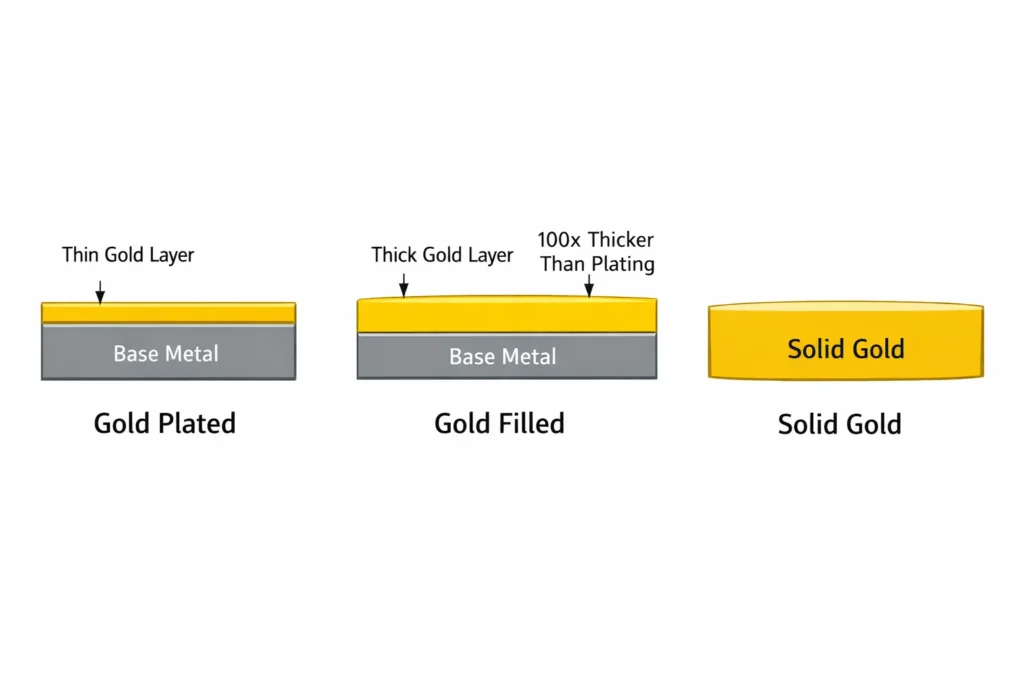
KIM’S GOLD DUST uses only Solid Gold for all our pieces except for three. The first exception is K233 C1 Corvette Hood Emblem Pendant which is an exact replica of that emblem. We could have made the letters and sections of the emblem in solid gold, but for the extraordinary time involved in setting and casting individual letters and emblem pieces, the decision was made to gold plate to keep the cost down. The second exception is our sterling silver crystal-beaded word bracelets that come with gold-filled beads as an option. The third exception is some crystal earrings come with gold-filled beads as well.
Gold plated jewelry consists of a base metal (like brass or copper) with an extremely thin layer of gold applied through electroplating. The gold layer typically measures 0.05 to 2.5 microns thick and can wear off over a period of time, especially with frequent wear or exposure to moisture and chemicals.
Gold filled jewelry features a much thicker layer of gold mechanically bonded to a base metal core, typically containing at least 5% gold by weight. This results in a gold layer approximately 100 times thicker than gold plating, making it significantly more durable and long-lasting. Quality gold filled pieces can maintain their appearance for decades with proper care, making them an excellent middle-ground option between plated and solid gold.
Cost differences between these options are substantial, with gold plated jewelry being the most affordable, gold filled commanding a middle price range, and solid gold representing the highest investment. The price of solid gold fluctuates with gold market values, while plated and filled pieces are primarily valued for their base metal and labor costs.
Gold Jewelry Cleaning and Maintenance
Proper care and maintenance significantly extend the life and beauty of gold jewelry, regardless of the specific type you own. While all gold shares certain care requirements, different gold types have unique considerations that affect cleaning methods, storage solutions, and professional maintenance needs. Understanding these differences helps preserve your jewelry’s appearance and value over time.
- General cleaning for all gold types involves using mild soap and warm water for regular maintenance. Create a solution with a few drops of dish soap in warm water, soak your jewelry for 10-15 minutes, then gently brush with a soft-bristled toothbrush to remove dirt and oils. Rinse thoroughly under warm running water and dry completely with a soft, lint-free cloth to prevent water spots.
- White gold requires special attention due to rhodium plating, which can wear thin over time with improper care. Avoid harsh chemicals, chlorine, and abrasive cleaners that can damage or strip the plating. Professional re-plating every 1-3 years maintains the bright white appearance, with frequency depending on wear patterns and individual body chemistry that may affect rhodium longevity.
- Rose gold benefits from its copper content’s natural patina, which can add character over time. While this metal resists tarnishing better than silver, the copper can develop a slight darkening that some find attractive. If you prefer the original pink shine, professional polishing by a jeweler can restore the surface, though this gradually removes metal and should be done sparingly.
- Chemical exposure should be minimized for all gold types, though sensitivity varies by karat and alloy composition. Remove jewelry before swimming in chlorinated pools, using household cleaners, exercising, or applying cosmetics and perfumes. These substances can discolor gold, damage gemstones, or accelerate plating wear on white gold and gold-filled pieces.
- Storage solutions protect gold jewelry from scratches, tangling, and environmental damage. Use individual soft pouches, lined jewelry boxes with compartments, or hang necklaces separately to prevent tangling. Keep gold away from other metals that might cause corrosion and ensure storage areas maintain stable temperature and humidity levels.
Frequently Asked Questions About Gold Jewelry
Can you mix different gold colors together?
Mixing different gold colors in jewelry has become increasingly popular and is generally considered stylish rather than a fashion faux pas. Many people successfully layer yellow, white, and rose gold pieces together, creating personalized and dynamic looks. The key is intentional styling rather than accidental mixing, with consideration for balance and proportion in your overall accessory selection.
Which gold type is most valuable?
Gold value is determined primarily by karat (purity level) and current market prices for gold, with craftsmanship and designer brand also influencing overall worth. Higher karat gold contains more pure gold and thus has higher intrinsic value, though the total value includes factors like weight, artistry, and gemstones.
Does gold jewelry ever lose its value?
Gold investment value depends on multiple factors, with higher karat pieces generally holding value better due to increased pure gold content. Market conditions, craftsmanship, brand recognition, and collectibility all influence whether jewelry appreciates or maintains value over time.
Can all gold rings be resized?
Most gold rings can be sized up or down by 1-2 sizes without compromising structural integrity, though intricate designs or channel-set stones may limit resizing options. Rose gold can be slightly more challenging to resize due to its copper content.
Why does gold jewelry sometimes irritate skin?
Allergic reactions to gold are typically caused by alloy metals (particularly nickel) rather than gold itself, with higher karat gold being less likely to cause sensitivities. People with metal allergies often find success with 18k or higher gold or palladium white gold. If skin irritation occurs, removing the piece, cleaning it thoroughly, and consulting with a dermatologist helps identify the specific cause.
The SILVER Standard
Understanding Different Types of Silver for Jewelry: Sterling, Fine and Argentium
When it comes to making stunning jewelry, choosing the right silver is the first big step. Silver isn’t just silver — it comes in a few varieties that affect how it looks, feels, and holds up over time. Most jewelry makers fall back on three familiar options: Sterling Silver, Fine Silver, and Argentium Silver.
Sterling Silver is your classic choice, containing 92.5% pure silver mixed with a bit of copper or other metals. This combo gives it strength—without making it too brittle—and that bright, shiny finish everyone loves. Like other precious metals, sterling silver can oxidize over time. We put a tarnish-resistant agent into our silver mix. With proper maintenance, silver jewelry improves with age and if cared for properly. It will reward you with long life and a lustrous look.
Then there’s Fine Silver, which is 99.9% pure silver. It’s softer and more malleable, making it excellent for pieces with intricate detail but less ideal if your design needs to stand up to everyday wear. So at KIM’S GOLD DUST we only use 92.5% sterling silver because it does stand up to everyday wear.
Understanding Silver Allergies
Before diving into metal alternatives, it’s important to understand why some people are allergic to silver. Pure silver (99.9% silver) is soft and malleable, so it is often alloyed with other metals, most commonly copper or nickel, to enhance its strength and durability. Nickel, in particular, is a common allergen and is the primary cause of allergic reactions in people wearing sterling silver jewelry. Symptoms of a silver allergy include redness, itching, swelling, or a rash around the area of contact. If you’re allergic to silver, there are many wonderful metal alternatives to consider.
If you experience these symptoms, don’t worry — there are several hypoallergenic metals that you can comfortably wear without worrying about irritation. Let’s explore the best options.
1. Titanium: The Top Choice for Sensitive Skin
Titanium is one of the best metals for those with sensitive skin or metal allergies. This lightweight, durable metal is naturally hypoallergenic, meaning it is unlikely to cause any adverse reactions. Titanium is biocompatible, which makes it ideal for piercings and other jewelry that is worn for extended periods. It’s also resistant to corrosion and tarnishing, meaning it will maintain its sleek appearance without reacting to sweat or moisture.
2. 316L Stainless Steel: An Industrial, Trendy Look, Hypoallergenic
Stainless steel jewelry does not tarnish, does not discolor or stain, is hypoallergenic and is almost indestructible. These reasons make stainless steel jewelry very practical for anyone who loves to be in style.
3. Gold (14K or 18K): A Timeless, Hypoallergenic Option
If you love the look of gold but can’t wear silver due to an allergy, 14K or 18K gold is an excellent alternative. Gold itself is hypoallergenic and doesn’t contain nickel, which makes it safe for most people with metal sensitivities. However, it’s important to note that lower karat gold (like 10K or lower) may contain higher amounts of other alloys, including nickel, which can cause reactions.
4. Platinum: Premium and Hypoallergenic
For those seeking the highest quality in both metal and comfort, platinum is an excellent option. This precious metal is naturally hypoallergenic and extremely durable. Platinum is a dense and heavy metal that resists tarnishing, corrosion, and scratching, making it a long-lasting choice for jewelry. It’s perfect for those who want to invest in a high-end, hypoallergenic metal that will stand the test of time.
While platinum is more expensive than gold or titanium, it’s worth the investment for its hypoallergenic properties and luxurious appearance. Its naturally white sheen is perfect for those who prefer a sleek, modern look, and it pairs beautifully with diamonds and gemstones.
Conclusion: Choose a Metal that’s Right for You
Titanium, 14K or 18K gold, platinum and 316L stainless steel are all hypoallergenic options that are safe for most people with metal sensitivities. Whether you’re looking for something classic, luxurious, or affordable, these metals offer a wide range of beautiful jewelry choices that are both stylish and comfortable.
SILVER JEWELRY CLEANING and MAINTENANCE
Here are a few suggestions and recommendations that can help you properly care for your silver jewelry but you should always consult your jeweler first.
Clean your silver jewelry with a mild soap and water solution, allowing the water to bead up, and then pat dry with a soft cloth. For more stubborn dirt, use jewelry cleaner designed for silver use.
Store your silver in a cool, dry place, preferably in a tarnish-preventive bag or wrapped in a soft piece of felt or cloth or sealed plastic bag after removing all the air. Store pieces individually, so that they don’t knock together and scratch.
Do not rub silver with anything other than a polishing cloth. Your jeweler or craft store should be able to provide one. Using tissue paper or paper towels can cause scratches because of the fibers in these products.
Do not expose silver to air and light during storage. This can cause silver to tarnish. Don’t wear sterling silver in chlorinated water or when working with household chemicals such as bleach and ammonia.
Frequently Asked Questions About Silver Jewelry
Is there a color difference between 999 Fine Silver and 925 Sterling Silver?
999 Fine Silver has a brighter, “whiter,” and slightly softer-looking sheen because it is 99.9% pure. In contrast,925 Sterling Silver often appears slightly warmer, sometimes with a subtle gray hue due to the 7.5% alloy (typically copper) added for strength.
Can all silver rings be resized?
Most silver rings can be sized up or down by 1-2 sizes without compromising structural integrity, though intricate designs or channel-set stones may limit resizing options.
Why does silver jewelry sometimes cause skin to turn color?
While sterling silver itself doesn’t turn green, the copper in the alloy can react with skin acidity or sweat, occasionally causing a temporary green mark. Thankfully, cleaning and polishing your Sterling Silver jewelry will return it quickly back to shine.
Is there value in Sterling Silver Jewelry? Sterling silver holds up well in resale markets. Unique or handcrafted designs can increase in value, contributing to an overall sterling silver investment portfolio.
Why does Sterling Silver tarnish and what causes it?
When Sterling Silver turns black this is called tarnishing. 925 Sterling Silver naturally tarnishes black over time. Sterling silver (92.5% silver, 7.5% copper) naturally tarnishes when exposed to sulfur, moisture, and air, creating a dark, dull layer of silver sulfide. This oxidation is normal, not a sign of poor quality, and can be removed with polishing cloths.
- Environmental Factors: Humidity, high heat, and sulfur-containing air (city smog) accelerate oxidation.
- Chemical Exposure: Household bleach, perfume, lotions, sunscreen, chlorine (pools), and salty air.
- Skin Interaction: Perspiration and body oils can react with the copper in the sterling silver.
STAINLESS STEEL
316L Stainless steel jewelry is very popular right now due to changing tastes and style trends that lean toward a more industrial, trendy look. It is durable, hypoallergenic, and a low-maintenance choice. It is very practical for anyone who wants to be in style while traveling and we know Corvette people love to travel. Stainless steel jewelry is a favorite of both men and women that want an industrial, street look with a touch of flash.
It is often compared to gold because the two last long and exude style. It is often called “surgical steel” because it does not tarnish, does not discolor or stain, is hypoallergenic and is almost indestructible. These reasons make stainless steel jewelry very practical for anyone who loves to be in style.
Stainless steel jewelry is very versatile. As previously mentioned, the reason that people buy jewelry differs from person to person. Some people buy it just to own something pretty, while others buy it to wear it and make themselves look more attractive in public. Some people also want to look more refined in public rather than attractive and once again wearing jewelry is a way to accomplish this.
Why 316L Is Considered the Premium Choice
316L Stainless Steel is considered the premium choice for jewelry because it’s designed for permanence. It won’t tarnish, fade, or turn your skin green. It’s also dense enough to create complex designs, support intricate detailing, color plating, and bold structures that wouldn’t hold up in softer metals.
Its ability to hold a strong plating bond also makes it the best base for gold-toned or colored finishes, meaning your jewelry retains its look longer without wearing down. It’s the best choice for contemporary accessories that will withstand all kinds of conditions and time.
What Is 304 Stainless Steel Jewelry?
304 Stainless Steel is a common type used in fashion jewelry. It’s made from a similar blend of iron, nickel, and chromium but contains slightly less nickel and molybdenum than 316L.
That difference makes it more affordable and still impressively durable. However, it’s more susceptible to corrosion in harsh conditions, so while it’s excellent for casual wear, it may require more care over time.
How 304 Compares to 316L in Durability and Quality
When comparing 304 to 316L, think of it this way: both perform well, but 316L is engineered for endurance. It handles water, sweat, and environmental exposure without issue. 304 remains a solid option for fashion-forward designs that don’t need the industrial-level protection of 316L.
Care of Stainless Steel Jewelry
It is one of the easiest metals to take care of, but it is prone to scratch. It is always best to store it in a sealed container for utmost protection. Avoid putting it in your pocket without a jewelry bag or a sealed plastic bag. For stainless steel earrings, simply avoid putting the two earrings in the same bag as they may scratch each other.
Cleaning your Stainless Steel Jewelry
(1) Clean with jewelry cloth.
(2) If that doesn’t help, then clean with warm soapy (Dawn is recommended) water and very gently. Use a soft cloth (like a 100% cotton) and gently wipe it dry or water spots may appear. In case of brushed stainless steel, move your cloth along the grain of your stainless steel jewelry as you don’t want to leave your brushed jewelry with shiny spots. You shouldn’t soak your stainless steel in water.
(3) If neither of these solutions work, seek a professional.
Frequently Asked Questions About Stainless Steel Jewelry
Is 316L Stainless Steel durable?
Yes, it is highly resistant to rusting, oxidation, and corrosion, ensuring a long-lasting, mirror-like shine.
What is the composition of 316L stainless steel?
Contains iron, chromium (16-18%), nickel (10-14%), and molybdenum (2-3%). The “L” stands for low carbon, which improves corrosion resistance.
Does stainless steel jewelry have resale value?
Regarding value and investment, sterling silver and gold are precious metals with intrinsic value, making them a good investment. Stainless steel is more about practicality and affordability, with no significant resale value.
TITANIUM
Titanium jewelry is a lightweight, hypoallergenic, and incredibly durable choice, making it ideal for daily wear and sensitive skin. Titanium is nickel-free and corrosion-resistant. It is often more affordable than precious metals while offering a modern gunmetal grey color. It has much of the same characteristics as its counterpart, stainless steel. But one main difference is the lightweight, which offers superior comfort.
Cost and Longevity
- Cost: It is more affordable than platinum or gold, with prices usually higher than stainless steel.
- Lifespan: Lasts for many years due to its strength and resistance to damage.
Cleaning Titanium Jewelry
Clean titanium jewelry at home by soaking it for 5 minutes in a mixture of warm water and mild dish soap (Dawn works great.). Gently scrub stubborn grime with a soft cloth or soft toothbrush, rinse thoroughly with warm water, and dry with a soft, lint-free cloth to prevent water spots. Avoid harsh chemicals; opt for gentle care to maintain its finish.
Frequently Asked Questions About Titanium Jewelry
Is Titanium Jewelry valuable? First, it’s important to know exactly what Titanium is. Titanium is NOT classified as a precious metal and therefore carries less value than say Gold.
Is Titanium durable? Yes, Titanium jewelry can last a lifetime due to its exceptional strength and corrosion resistance, often outlasting traditional metals.
Can Titanium be resized? Due to its extreme hardness, it cannot be resized, which is a key factor to consider when purchasing rings.
CARBON FIBER
The Materials
Carbon is the chemical element of atomic number 6, a non-metal that has two main forms (diamond and graphite) and occurs in impure form in charcoal, soot and coal. Carbon is essential to all known living systems and without it, life as we know it could not exist.
The uses of carbon and its compounds are extremely varied. One of these is carbon fiber.
Carbon fiber is a strong, stiff fiber of nearly pure carbon, made by subjecting various organic raw materials to high temperatures combined with synthetic resins to produce a strong, lightweight material used in construction of aircraft, spacecraft, sports equipment and a select few pieces of our jewelry.
Is Carbon Fiber Indestructiable?
Carbon fiber is super strong and light but not indestructible. Carbon fiber, like metal, is subject to normal wear and tear. Like any jewelry, we recommend taking rings and other jewelry off if you plan on working machinery, heavy labor, intense exercise, using sandpaper, using household cleaners or swimming in chlorinated water.
Cleaning
For general cleaning, we recommend using just warm water and liquid soap.
WATCH CARE TIPS
Setting Time
Remove watch from your wrist before attempting to set the time. Pulling out the side stem (crown) with the watch still on your wrist can damage the crown over time.
Daily Cleaning
Gently wiping off smudges and fingerprints from the metal surfaces of your watch with a soft cloth will avoid buildup of dust, dirt and bodily oils. Leather cleaner can be used to clean leather bands.
Activities to avoid while wearing your watch are listed below.
It is best not to expose your watch to shock, moisture (steam included) or extreme heat, which may happen when doing the following:
Washing dishes
Playing golf, tennis, basketball or other sports
Sitting in a sauna or steam bath
Sleeping (your watch is not necessarily exposed to any of those elements while sleeping, but it is unnecessary wear and tear)
Water Resistant, Not Waterproof

As a general rule, try to not get your watch wet. Should you have an “oops” moment, here are the basics on what your watch can handle based on its ATM (atmospheres):
3 ATM or 30 Meters (most watches) – OK for splashes of water, rain, or accidental immersion in water when removed immediately. NOT suitable for swimming or bathing.
5 ATM or 50 Meters – OK for perspiration while playing sports, swimming in shallow water, and wearing around the kitchen sink (but not under a running faucet). NOT suitable for bathing, snorkeling or scuba diving.
10 ATM or 100 Meters – OK for perspiration while playing sports, swimming, diving, bathing, snorkeling, and wearing around the kitchen sink (but not under a running faucet). NOT suitable for scuba diving.
The effectiveness of a watch’s water resistance can be compromised over time from wear and tear on the watch.
Storage
If you have purchased watches in bulk and are keeping some in storage for future use, pull the crown to the out position to save battery life (second hand will stop ticking).
For your personal watch care, store your watch in the box or pouch it came in. This will prevent scratching from other items around it and keep it free from dust and other particles in the air.
Be aware of the items around your watch when you set it down. The magnetism of smart phones, speakers, handbag clasps, hair dryers, electric razors, and refrigerators (among other things) can cause your watch to gain or lose time or make it stop all together.
